
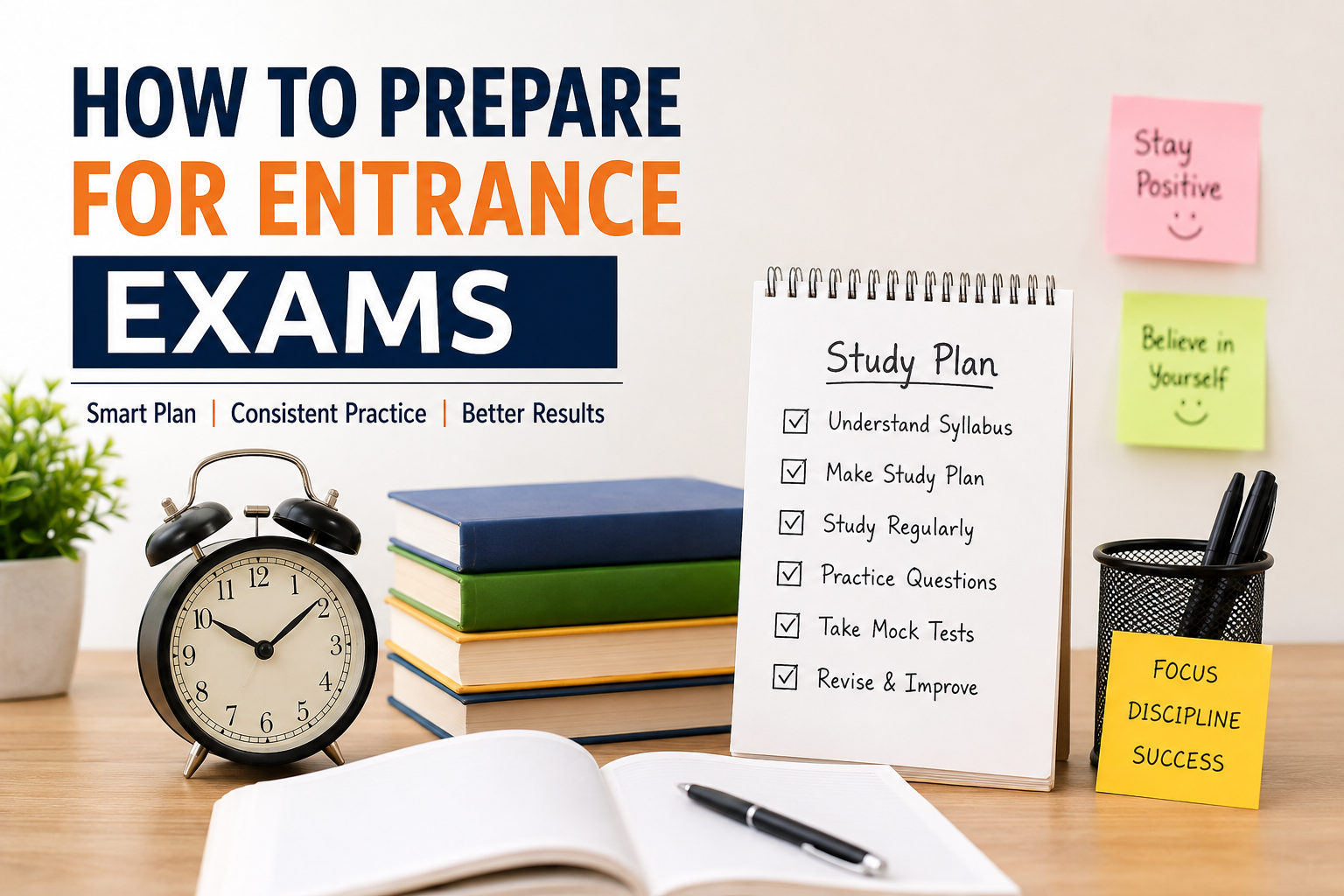
Preparing for entrance exams is not only about studying for long hours. In my opinion, it is about studying in the right way with a clear goal and a practical plan. Many students believe that success comes from reading every book available, but I have learned that smart preparation always gives better results than random hard work. Every entrance exam is competitive because thousands of students compete for limited seats. That is why consistency, confidence, and proper strategy matter more than anything else.
When I started learning about entrance exam preparation, I realized that every successful student follows a routine instead of depending on motivation. Motivation comes and goes, but discipline keeps you moving forward. If you want to secure admission to your dream college or university, you should begin your preparation as early as possible and stay committed until the exam day.
Understand the Exam Pattern
The first thing I always recommend is understanding the exam completely. Before opening any book, spend some time learning about the exam pattern, syllabus, marking scheme, and time duration. Knowing what will be asked helps you avoid wasting time on unnecessary topics.
Download the latest syllabus from the official website of the exam authority. Compare it with previous years’ papers and identify the most important sections. This simple step gives you a clear direction and helps you prepare with confidence.
Set a Clear Goal
I believe every student should have a clear target before beginning preparation. Ask yourself why you want to clear the entrance exam. Whether you want admission to a medical college, engineering university, business school, or any other institution, your goal should remain visible every day.
Write your goal on a piece of paper and place it near your study table. Whenever you feel tired or distracted, looking at your goal reminds you why you started this journey.
Create a Realistic Study Plan
A proper study plan makes preparation easier. Instead of studying randomly, divide your subjects into daily and weekly targets. I personally prefer studying difficult subjects during the morning because my concentration is better at that time.
Your timetable should include every subject according to its importance. At the same time, keep some extra time for revision and mock tests. Avoid creating unrealistic schedules because they often lead to frustration. A simple routine that you can follow every day is always more effective than a complicated one.
Collect the Right Study Material
Choosing the correct study material is extremely important. Many students make the mistake of buying too many books. This only creates confusion.
I always suggest selecting one reliable textbook for each subject along with previous year question papers and a good practice book. If your concepts are clear from one source, there is no need to keep changing books. Focus on quality instead of quantity.
Online resources, educational videos, and practice platforms can also help you understand difficult topics, but avoid spending too much time switching between different websites.
Build Strong Basics
Every entrance exam tests your understanding rather than your memory. Memorizing answers without understanding concepts is never a good strategy.
Whenever I study a new topic, I first try to understand the basic concept. Once the foundation becomes strong, solving difficult questions becomes much easier. If you find any chapter difficult, spend extra time on it instead of skipping it.
Strong basics increase confidence and reduce exam stress because you know how to solve different types of questions.
Practice Every Day
Practice is the key to success in any competitive exam. Reading theory alone cannot improve your performance. You should solve questions daily to develop speed and accuracy.
I like solving topic wise questions immediately after completing a chapter. This helps me identify weak areas while the concepts are still fresh in my mind.
As your preparation improves, start solving full length practice papers within the actual exam time. This creates a real exam environment and prepares your mind for the final day.
Solve Previous Year Question Papers
One of the best ways to prepare is by solving previous year papers. These papers show the type of questions frequently asked in the exam.
I usually solve old papers without looking at the answers first. After completing the paper, I carefully analyze every mistake. This process helps me improve my performance and avoid repeating the same errors.
Previous papers also help you understand which topics are asked more often and how questions are framed.
Take Mock Tests Regularly
Mock tests play a major role in entrance exam preparation. They improve time management, confidence, and accuracy.
Initially, you may score lower than expected, but do not get discouraged. Every mock test is a learning opportunity. Instead of focusing only on marks, analyze your mistakes carefully.
Check which questions consumed the most time, where you made careless mistakes, and which topics require more practice. Gradually, your scores will improve.
Improve Time Management
Many students know the answers but fail to complete the paper on time. This is why time management is an essential skill.
While practicing, use a timer and try completing each section within a fixed duration. Learn to skip difficult questions temporarily instead of wasting valuable minutes.
I believe it is always better to answer easy questions first because they increase confidence and secure quick marks.
Make Short Notes
Preparing short notes is one of my favorite study techniques. Writing important formulas, definitions, shortcuts, and key concepts in one notebook saves a lot of revision time.
Whenever exams come closer, reading these notes becomes much easier than opening large textbooks again.
Your notes should be neat, simple, and organized so that you can quickly revise important topics before the exam.
Revise Consistently
Revision is just as important as learning new topics. Without revision, even well prepared concepts can be forgotten over time.
I try to revise every completed chapter within a few days. Weekly and monthly revision sessions help keep information fresh in my memory.
Instead of reading everything repeatedly, focus more on topics where you usually make mistakes.
Avoid Common Mistakes
Many students lose marks because of avoidable mistakes rather than lack of knowledge.
One common mistake is studying without a plan. Another mistake is ignoring weak subjects while repeatedly reading favorite topics. Some students also waste too much time on social media or constantly compare themselves with others.
I believe every student should focus on personal progress instead of competition. Improvement happens when you compare yourself with yesterday’s performance, not someone else’s.
Stay Healthy During Preparation
Good health directly affects your concentration and learning ability. Long study hours are useful only if your body and mind remain active.
Eat balanced meals, drink enough water, and sleep for at least seven to eight hours every night. Lack of sleep reduces memory and concentration.
Taking short breaks between study sessions also refreshes the mind and helps maintain productivity throughout the day.
Stay Positive and Motivated
Every student experiences difficult days during preparation. Sometimes mock test scores are disappointing, while other times certain subjects seem impossible to understand.
Whenever I face such situations, I remind myself that improvement takes time. Every successful candidate once struggled with difficult topics.
Celebrate small achievements because they build confidence. Completing a chapter, improving mock test scores, or understanding a difficult concept are all signs of progress.
Surround yourself with positive people who encourage your efforts instead of creating unnecessary pressure.
Manage Exam Day Effectively
Preparation does not end before the exam. Your performance on exam day also matters.
Sleep well the night before the exam and avoid learning completely new topics at the last moment. Revise only important notes and formulas.
Reach the examination center early to avoid unnecessary stress. Read every question carefully before answering and manage your time wisely.
Stay calm throughout the exam because confidence often helps you solve questions that initially appear difficult.
Learn From Every Attempt
Not everyone succeeds on the first attempt, and that is completely normal. If your result is not as expected, do not lose hope.
Analyze what went wrong during your preparation. Identify your weak areas and create a better strategy for the next attempt. Every failure teaches valuable lessons that can eventually lead to success.
Many successful professionals cleared their entrance exams only after learning from earlier mistakes. Persistence is often more important than talent.
Final Thoughts
Preparing for entrance exams is a journey that tests patience, discipline, and determination. From my experience, success is not achieved by studying endlessly but by studying with consistency and purpose. Understanding the syllabus, making a practical study plan, practicing questions daily, solving previous year papers, taking mock tests, and revising regularly can significantly improve your chances of success.
Always remember that every small effort you make today brings you one step closer to your dream college or university. Stay focused, believe in your abilities, and never let temporary failures stop your progress. If you remain dedicated to your preparation and continue improving every day, success will eventually become the reward for your hard work.
