
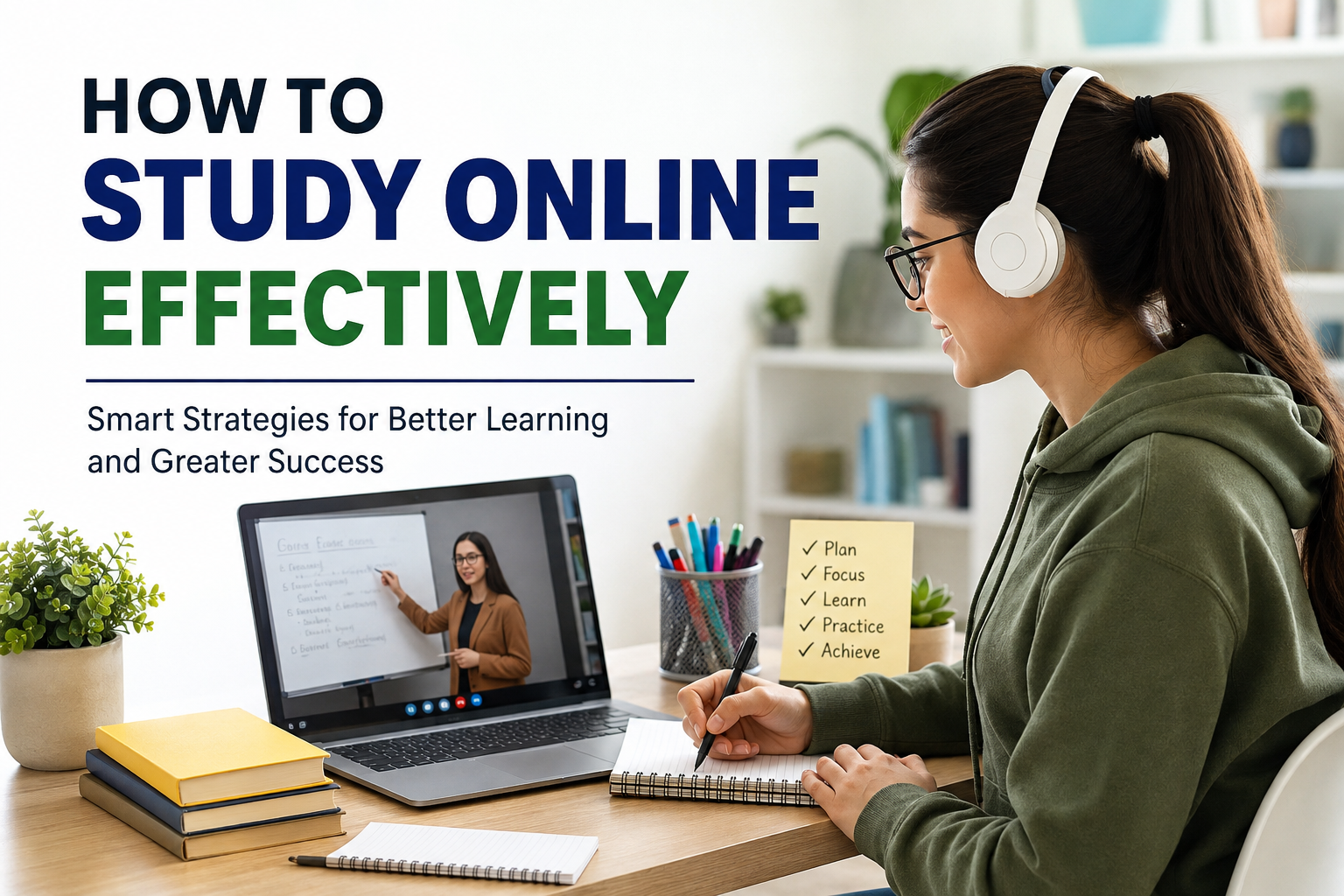
Online learning has become a normal part of education. Whether you are a school student, a college student, or someone learning a new skill, studying online gives you the freedom to learn from anywhere. I personally believe that online learning is one of the best opportunities available today because it allows us to learn at our own pace. However, I have also realized that studying online is not always easy. There are many distractions, and without proper discipline, it becomes difficult to stay focused.
Over time, I have learned that online study becomes much more effective when we follow a proper routine, use the right learning methods, and stay consistent. In this article, I will share the strategies that I personally find useful for studying online effectively. These simple tips can help anyone improve their learning experience and achieve better results.
Understand Your Learning Goals
Before starting any online course, I always ask myself one simple question. Why am I learning this? Having a clear purpose makes a huge difference. If I know that I am learning a skill to get a better job, improve my grades, or prepare for an exam, I naturally stay more motivated.
Write your goals on paper or save them in your phone. Looking at your goals every day reminds you why you started and encourages you to keep going even when you feel tired.
Create a Dedicated Study Space
One of the biggest mistakes people make is studying anywhere they find a place. I have noticed that my concentration improves when I study in the same quiet location every day.
Choose a clean desk with good lighting. Keep your books, notebook, laptop, charger, and water bottle nearby. A comfortable chair also helps because you may spend several hours studying.
Avoid studying on your bed because it often makes you feel sleepy instead of productive.
Follow a Daily Study Schedule
Online learning gives freedom, but too much freedom often leads to procrastination. That is why I always prefer creating a daily timetable.
Choose specific hours for studying every day. Treat these hours like an important appointment that cannot be missed.
For example, you may decide to study from 9 AM to 11 AM every morning. Once studying becomes part of your daily routine, you no longer need to force yourself to start.
Consistency is far more important than studying for long hours once a week.
Remove All Distractions
The internet is full of distractions. Social media notifications, YouTube recommendations, and mobile games can easily waste hours.
Whenever I start studying, I put my phone on silent mode or keep it in another room. I also close unnecessary browser tabs so that I can focus only on the lesson.
If social media distracts you, consider using website blockers during study sessions. Staying focused for one hour is much better than spending three hours with constant interruptions.
Take Notes While Learning
Many students simply watch online lectures without writing anything. I used to do the same, but I realized that I forgot most of the information later.
Now I always keep a notebook beside me. I write important definitions, formulas, examples, and key ideas in my own words.
Writing notes helps me understand concepts better and makes revision much easier before exams.
Learn Actively Instead of Watching Passively
Watching videos alone does not guarantee learning. Real learning happens when you actively participate.
After completing each lesson, I ask myself questions about what I learned. I try explaining the topic without looking at my notes. If I cannot explain it clearly, I know I need to study it again.
You can also solve quizzes, complete assignments, or teach the concept to a friend. These activities strengthen your understanding much more than passive watching.
Break Long Sessions into Small Parts
Studying continuously for several hours can be exhausting. I have found that shorter study sessions help me stay fresh and focused.
A popular method is studying for 25 to 30 minutes followed by a five minute break. After completing four study sessions, take a longer break.
During breaks, stretch your body, drink water, or take a short walk. Avoid scrolling through social media because it often extends your break longer than planned.
Choose High Quality Learning Resources
Not every online course provides accurate or useful information. Before starting a course, check the instructor’s experience, student reviews, and course content.
Reliable educational platforms usually provide structured lessons, practice exercises, and certificates that add value to your learning journey.
Instead of jumping between multiple courses, complete one course properly before moving to another.
Practice What You Learn
Knowledge becomes useful only when you apply it.
If you are learning programming, write code every day.
If you are studying English, practice speaking and writing daily.
If you are learning graphic design, create your own projects.
Practical experience helps you remember information for a much longer time and builds real confidence.
Ask Questions Without Hesitation
Many students hesitate to ask questions because they think their doubts are too simple.
I believe every question is valuable because confusion disappears only when we ask.
Use discussion forums, live classes, or community groups to interact with teachers and fellow students.
Learning becomes easier when you communicate with others instead of studying alone.
Revise Regularly
One of the biggest reasons students forget information is the lack of revision.
Whenever I finish a chapter, I review my notes within the next twenty four hours. Then I revise again after a few days.
Regular revision strengthens memory and reduces the stress of preparing for exams at the last moment.
Even spending fifteen minutes reviewing old topics every day can make a huge difference.
Stay Organized
Keeping your study materials organized saves time and reduces frustration.
Create separate folders for each subject on your computer. Name your files properly so they are easy to find later.
Keep your notebooks arranged and store important documents safely.
An organized learning environment allows you to focus completely on studying instead of searching for missing files.
Maintain a Healthy Lifestyle
Studying effectively is not only about books and videos. Your physical and mental health also affects your learning ability.
Sleep for at least seven to eight hours every night.
Drink enough water throughout the day.
Eat balanced meals that provide energy.
Exercise regularly, even if it is only a short walk.
When your body feels healthy, your mind can concentrate much better.
Stay Motivated During Your Learning Journey
Motivation naturally goes up and down. There are days when you feel excited to study and days when you do not feel like opening your laptop.
During such moments, remind yourself why you started.
Celebrate small achievements such as completing a chapter, finishing a course, or improving your quiz score.
Small rewards keep your motivation alive and make learning enjoyable.
Track Your Progress
I always believe that measuring progress increases confidence.
Keep a checklist of completed lessons, assignments, and practice tests.
Every time you finish a task, mark it as completed.
Looking at your progress reminds you how much you have already achieved and encourages you to continue.
Join Online Learning Communities
Learning alone sometimes becomes boring.
Joining online communities allows you to interact with people who share similar goals.
You can exchange ideas, solve doubts, participate in discussions, and stay motivated by seeing the progress of others.
Positive communities create an environment where learning feels more enjoyable and less stressful.
Avoid Multitasking
Many people think they can study while checking social media or chatting with friends.
In my experience, multitasking reduces concentration and increases mistakes.
Focus on only one lesson at a time.
Give your full attention to the topic you are studying before moving to something else.
Quality of study is always more important than quantity.
Develop Self Discipline
Online education requires personal responsibility.
There may not always be a teacher reminding you to complete assignments or attend lectures.
Success depends on your own discipline.
Study even when you do not feel motivated.
Complete your tasks on time.
Stay committed to your goals.
Discipline creates long term success far more than temporary motivation.
Keep Improving Your Study Methods
Every learner is different.
Some people learn better through videos.
Others prefer reading books or solving practical exercises.
Experiment with different techniques until you find what works best for you.
Never hesitate to improve your learning habits because even small improvements can produce better results over time.
Conclusion
Studying online effectively is not about spending endless hours in front of a computer. It is about studying with focus, consistency, and the right strategy. I believe anyone can become a successful online learner by creating a daily routine, removing distractions, taking useful notes, practicing regularly, and maintaining self discipline.
The biggest advantage of online learning is that it gives us complete control over our education. We can learn anytime, anywhere, and at our own speed. If we use this opportunity wisely, online education can help us build valuable skills, improve our careers, and achieve our personal goals.
Remember that learning is a journey, not a race. Stay patient, keep improving every day, and never stop learning. Every lesson you complete brings you one step closer to becoming the person you want to be.
.